

Home and property services
1-800 WATER DAMAGE
1-800 WATER DAMAGE provides restoration services for homes and businesses affected by water, fire, smoke, mold or sewage. Its customer offer includes around-the-clock emergency service and work with property managers, homeowners, plumbers and insurance professionals.
The customer
What customers
come for.
The customer may need help after an unexpected event rather than a planned home improvement. The work can involve coordinating with plumbers and insurance professionals as well as assessing the property and carrying out restoration.
The business
Several kinds of property damage
The menu includes water extraction and drying, mold remediation, sewage cleanup, fire and smoke restoration and odor removal. These are different types of technical work within the restoration offer. Which would the proposed business perform initially, which would require additional staff preparation or equipment, and how would the local team establish the scope when the first report from a property owner is incomplete?
Your role
Organizing a response when water enters a building
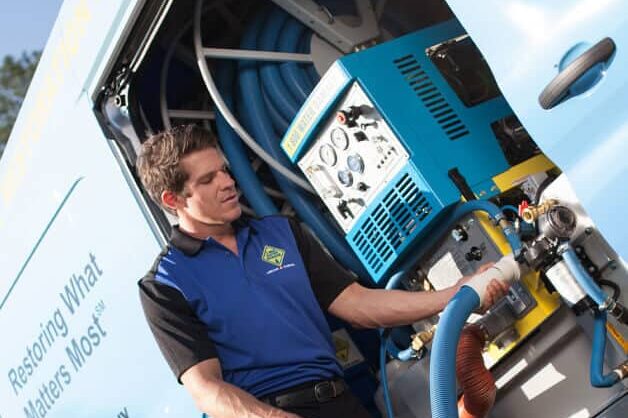
Water-extraction work includes standing-water removal, moisture detection, drying and assessment of wet contents. Technicians use equipment including pumps, vacuums, fans and air movers. What would the proposed owner do to keep trained people and equipment ready, and who would decide what needs to be dispatched when a customer reports a leak or flood?
The customer
From the initial response to restoration
The service moves through protecting belongings, drying affected surfaces and subsurfaces, evaluating contents and discussing repair options. Who would explain what is happening at the property, record the work and coordinate the next step? How would updates reach a homeowner, property manager or insurance professional when several people are involved?
The extraction description specifically discusses moisture below carpeting and in subsurfaces, as well as water visible in a room. It describes moving or raising belongings, evaluating wet contents and discussing restoration options after removal. The service sequence therefore provides several separate stages to follow when observing how a local team explains and records a water-loss job.
People & place
People, vehicles and after-hours arrangements
The brand advertises emergency response throughout the day and night, and identifies skilled technicians working with other property and insurance professionals. The water-service description also refers to stocked trucks and specialized equipment. For the proposed business, what staffing and call-handling arrangement would cover those hours, where would equipment be stored and maintained, and how would responsibility transfer between people handling an active job?
Support
Training and support through BELFOR Franchise Group
BELFOR Franchise Group provides structured training, hands-on instruction, marketing resources and operational guidance. Ask what the current program includes for the selected restoration services, how staff preparation would be verified and what help is available after opening. Which local relationship-building and job-coordination work would the owner still perform?
A closer look
Questions about
1-800 WATER DAMAGE.
Is the business limited to water extraction?
No. The menu also covers mold, sewage, fire and smoke, odor and other property-restoration work.
Does the water-service description include drying?
Yes. It describes standing-water removal, moisture detection, drying affected areas and evaluating contents as part of the service sequence.
What support helps an owner prepare the business?
Owner support includes hands-on training, operating guidance and marketing resources, with support through BELFOR Franchise Group.
Make it personal
Your next
questions.
Keep the questions that matter to you as you explore.
Which restoration services would the proposed operation be equipped and staffed to perform?
Who would assess a loss, approve the work scope and coordinate an active job?
What technical training and certifications would the selected work require?
How would emergency calls and field response be covered outside normal office hours?
What vehicles, drying equipment, storage and equipment-care arrangements would be needed?
How would customer updates and job information be coordinated with property and insurance professionals?
Other businesses
to explore.
All businesses
Home and property services
Mr. Handyman
Home and commercial repairs and maintenance delivered by a team of service professionals.
Explore
Home and property services
The Brothers that just do Gutters
A specialist gutter business offering installation, replacement, cleaning and maintenance.
Explore
Home and property services
Conserva Irrigation
An irrigation service business inspecting, repairing and installing landscape watering systems.
Explore